
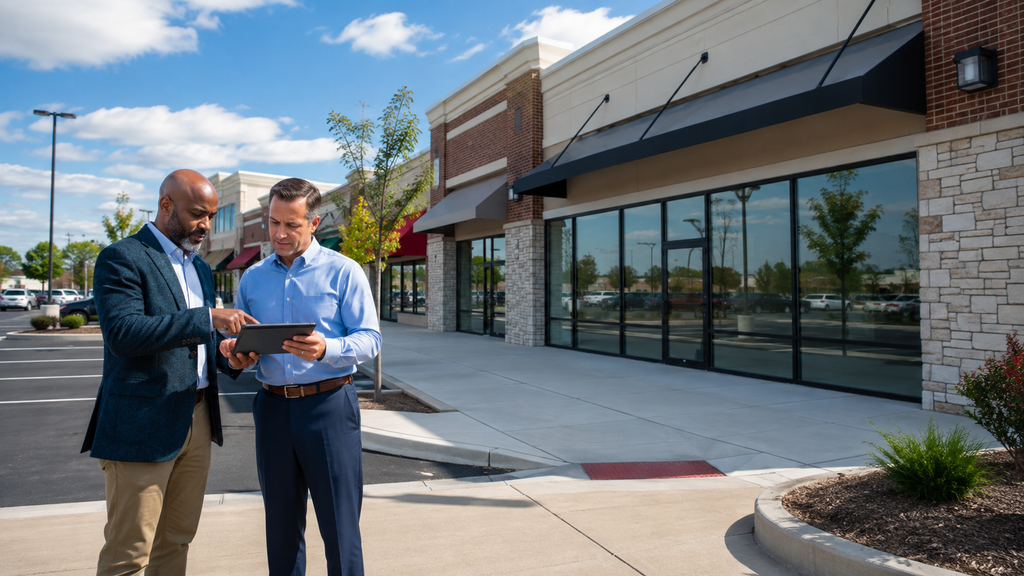
7 Things to Check Before Leasing a Location for Your Total Wireless Store
A beautiful store in the wrong location can still struggle.
For wireless retailers, location affects customer traffic, staffing, marketing, rent, and long-term performance. That is why a lease should never be signed based on appearance or price alone.
Before committing to a location for your Total Wireless store, evaluate these seven factors.
1. Customer Demographics
Start by understanding who lives and works around the proposed location.
Look at population density, household composition, income levels, languages spoken, commuter traffic, and nearby residential communities. The goal is to determine whether the trade area includes enough potential customers for a prepaid wireless business.
A location should make sense for the people who will actually use the store.
2. Visibility
Customers need to notice the store before they can visit it.
Review visibility from the road, storefront exposure, signage opportunities, lighting, and whether other buildings or trees block the location. A space deep inside a shopping center may offer lower rent, but it may also be harder for customers to find.
Strong visibility can reduce the amount of marketing required to create awareness.
3. Access and Parking
A customer may see your store and still drive past it if entering the property is difficult.
Check:
- Parking availability
- Entry and exit points
- Public transportation access
- Pedestrian traffic
- Traffic direction
- Nearby intersections
- Accessibility for customers with disabilities
Visit the location at different times of the day. A property that looks convenient at noon may be difficult to access during rush hour.
4. Nearby Businesses
The surrounding tenant mix can help or hurt your store.
Grocery stores, restaurants, discount retailers, financial-service businesses, and other frequently visited locations may create valuable traffic. Empty storefronts and poorly maintained properties can have the opposite effect.
You should also determine whether nearby businesses attract the same type of customer you want to serve.
5. Wireless Competition
Competition is not automatically a reason to reject a location. In some cases, several wireless stores in the same trade area confirm that customer demand exists.
The important question is whether the market can support another store.
Review nearby carrier stores, independent wireless dealers, device-repair businesses, and big-box retailers. Visit the area in person instead of relying only on an online map.
6. Total Occupancy Cost
Rent is only one part of the monthly cost.
Ask about common-area maintenance charges, taxes, insurance requirements, utilities, signage fees, annual increases, security deposits, and required improvements. A lease that initially appears affordable may become expensive after every charge is included.
The location must work under realistic sales expectations—not a best-case projection.
7. Condition of the Space
A former retail store may require less construction than a raw or heavily damaged space.
Review the electrical system, HVAC, plumbing, restrooms, flooring, ceiling, storefront, accessibility, and permit history. Before signing a lease, obtain professional estimates for the work required to open.
Unexpected construction expenses can quickly consume working capital.
Do Not Rush the Lease
Landlords and brokers may create pressure to sign quickly. Take enough time to evaluate the market, understand the full cost, and review the lease with qualified professionals.
Miracle Group Holdings works with qualified dealer candidates to evaluate potential opportunities before store development moves forward.
Have a market or location in mind? Complete our dealer application and tell us where you are interested in opening.
Submit Your Dealer Application